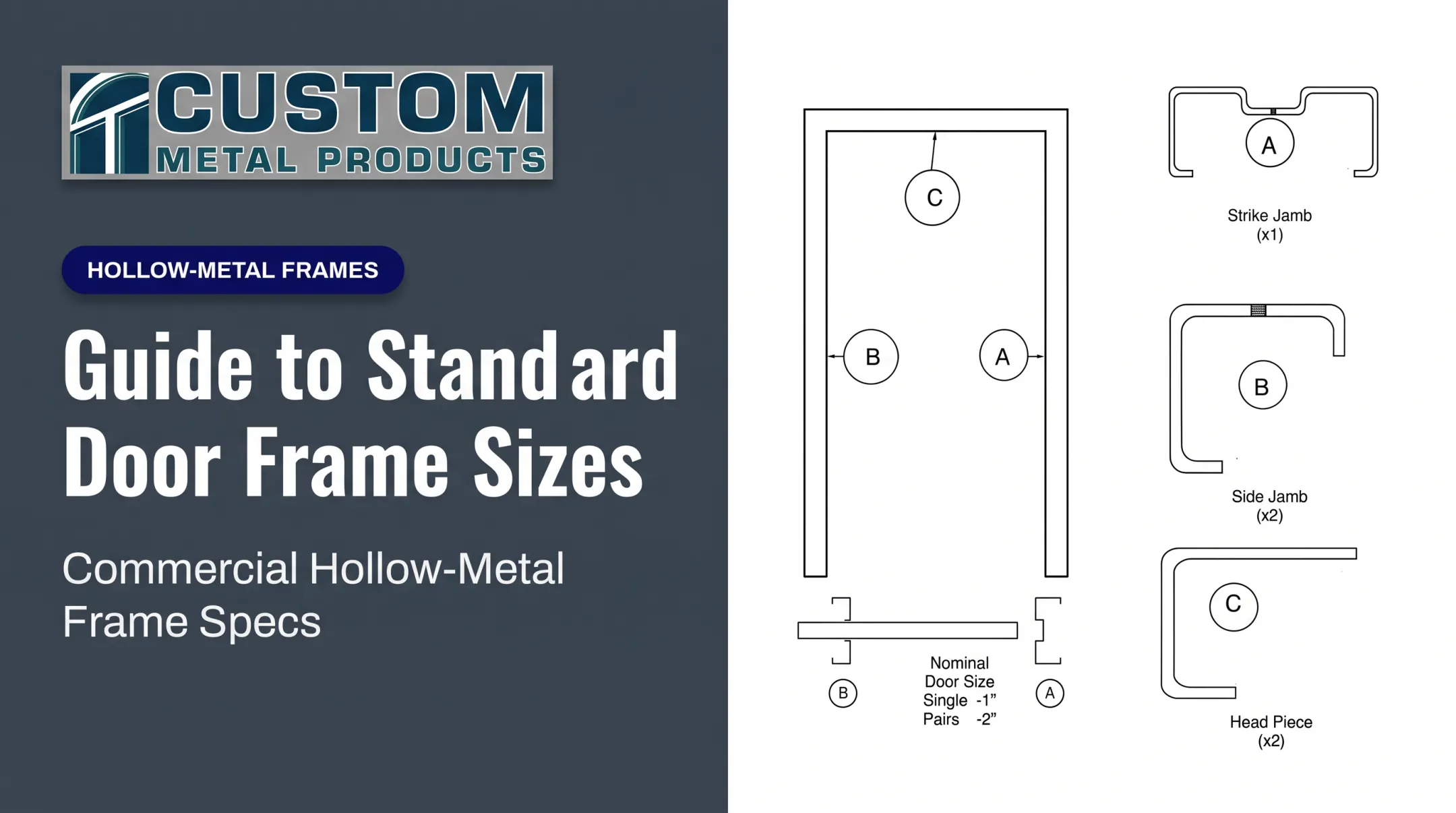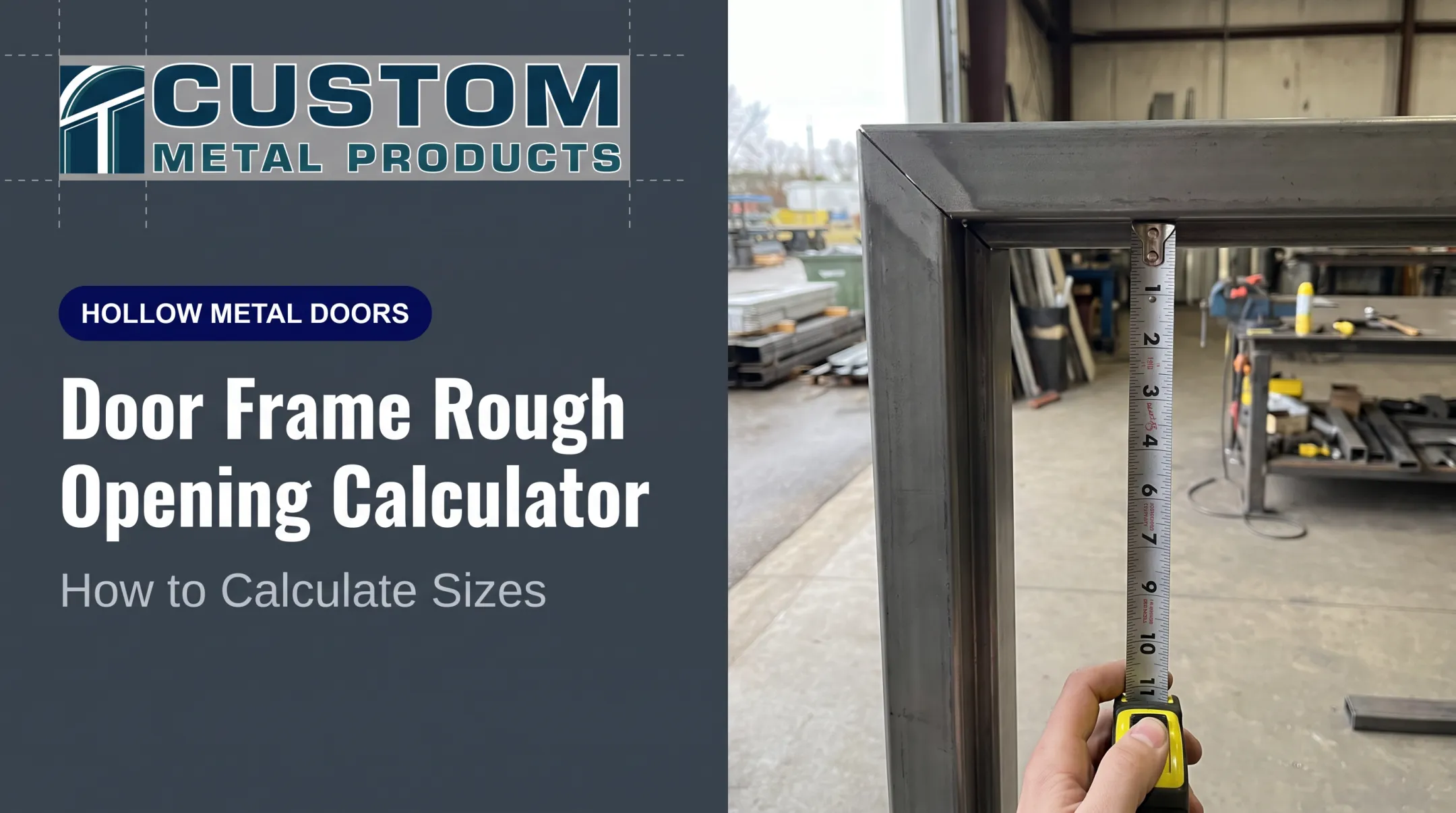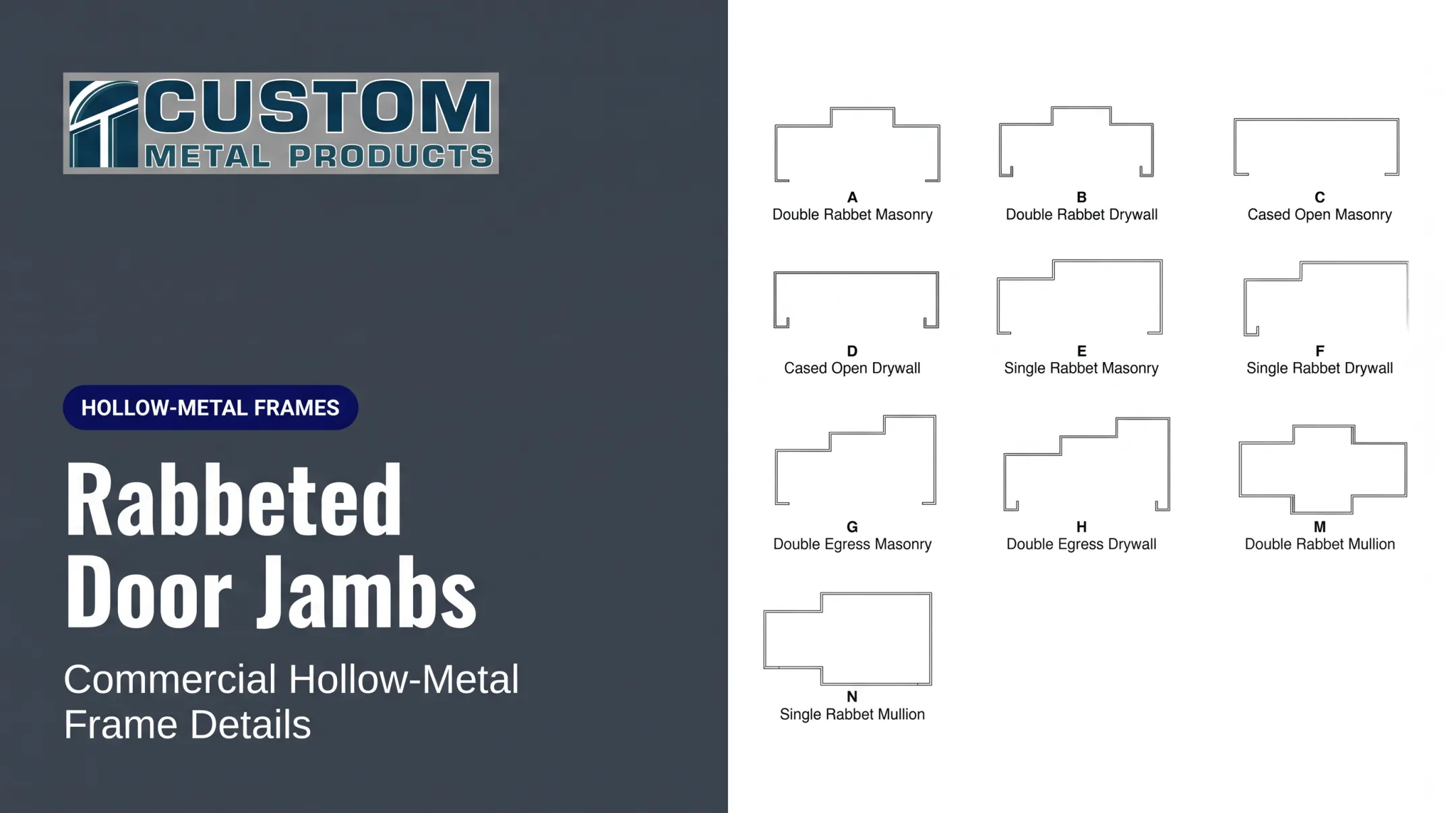

Many distributors and installers run into trouble here for a simple reason: they confuse hinge backset with lock backset, or assume one number applies to every door and frame combination. It doesn't. Per ANSI/NAAMM HMMA 801-24, hinge backset is measured from two different reference points depending on whether you're looking at the door or the frame.
This article covers what door hinge backset represents, the typical commercial dimensions in use today, how to specify and verify it before fabrication, and the mistakes that lead to costly rework.
Key Takeaways
- Hinge backset places hinge prep from a door or frame reference face—and those two values are not the same
- Frame backset runs slightly larger than door backset to create clearance for smooth operation
- Lock backset is a separate dimension from hinge backset, taken from different reference points
- Door thickness, hinge size, frame profile, and fire rating all drive the correct backset
- Confirm backset on approved shop drawings before fabrication, especially on custom or rated openings
What Door Hinge Backset Represents and What Influences It
Door hinge backset is the distance between a fixed reference point on the door or frame and the hinge preparation itself. Depending on the manufacturer's drawing, that reference point might be the hinge leaf edge or the pivot centerline.
Per HMMA 801-24, hinge backset on a door runs from the push-side face sheet to the edge of the hinge cutout. On a frame, it's measured from the frame stop to the edge of the hinge cutout in the rabbet. Those are two different physical starting points, not one shared measurement applied twice.

The two applications of the term:
- Door: from the face sheet (or edge on some drawings) to the hinge location in the door edge
- Frame: from the frame stop to the hinge cutout in the rabbet
Don't confuse either of these with lock backset. Door specification forms typically list LOCK PREP, BACKSET, and HINGES as three separate fields on the same order sheet.
The "backset" field there refers to the lock or latch preparation, commonly 2-3/4 inches or per template, not the hinge at all. Hinge backset lives in its own field, tied to hinge size, hinge weight, and hinge type.
Within a finished opening, hinge backset positions the hinge pivot point. That determines hinge-side clearance and how the door swings and seats against the stop when it closes.
Factors that can shift the required backset:
- Door thickness
- Hinge size and type, such as butt, pivot, or continuous
- Frame profile and rabbet depth
- Manufacturing tolerances
- Special hardware, including closers and electrified hinges
- Fire-rating requirements
Any one of these can move the correct backset away from a "typical" figure. That's why checking the actual door and frame drawing matters more than memorizing a single dimension.
Range and Key Technical Properties of Door Hinge Backset
Hinge backset is a product of the door-and-frame design, not a universal constant. Treat any published number as a starting point to confirm in current manufacturer documentation, not a rule to apply blindly across every job.
Nominal and Common Commercial Configurations
For standard 1-3/4-inch commercial doors with 4-1/2 x 4-1/2-inch butt hinges, two independent manufacturers document a matching pairing: a 5/16-inch backset on the frame and a 1/4-inch backset on the door, based on published technical data for commercial hollow metal openings.
| Component | Typical Backset | Common Condition |
|---|---|---|
| Frame | 5/16 in. | 1-3/4 in. door, 4-1/2 in. or 5 in. butt hinge |
| Door | 1/4 in. | Same condition |

Not every published "backset" figure means the same thing. Some frame documentation labels a separate 5/8-inch stop dimension, which is distinct from the 5/16-inch hinge backset on the same drawing. Read the callout carefully before quoting a number.
Standard door thickness also varies by product line. Custom Metal Products' panel-embossed series defaults to 1-3/4 inches, with 1-3/8 inches optional on non-rated configurations only. Confirm thickness before you assume a backset applies.
Door-to-Frame Relationship
Frame backset commonly runs slightly larger than door backset, typically by 1/16 inch, matching the 5/16-inch frame and 1/4-inch door pairing above. That gap creates the operating clearance a door needs to close without binding on the hinge side.
Worked example:
- Frame hinge backset: 5/16 in. (0.3125 in.)
- Door hinge backset: 1/4 in. (0.25 in.)
- Built-in clearance: 1/16 in. (0.0625 in.)
That clearance is intentional. Separately, ANSI/SDI A250.11 requires hinge and strike backsets to keep the door's horizontal centerline aligned with the frame rabbet's centerline within ±1/32 inch before installation, an alignment check, not a nominal backset figure on its own.
Boundary Conditions and Special Applications
Standard butt-hinge figures don't automatically carry over to:
- Doors thicker than 1-3/4 inches (specify hinge size and backset separately)
- Oversized or heavy doors (pivots often replace butt hinges)
- Continuous hinges mounted along the full door and frame edge
- Communicating, specialty, or unusual frame profiles
- Retrofit openings with prep that may not match current standards
Fire-rated openings add another layer of restriction. Installation of fire door hardware must follow NFPA 80 and the manufacturer's listed instructions. A typical backset figure does not authorize field changes to a labeled assembly.
Operating Consequences
Get the backset wrong, or mismatch door and frame preparations, and the results show up quickly:
- Hinge-side binding
- Restricted door swing
- Uneven margins around the door
- Poor latching
- Premature hinge wear
- Costly rework or component replacement
Hardware-location tolerances typically hold to ±1/32 inch, with hinge cutouts toleranced to template dimension plus 0.015 inch and minus 0 inch. That's a tight margin—and little room for backset error before problems show up at the field walkthrough.
How Hinge Backset Is Specified and Verified
Hinge backset is both an ordering specification and a field-verification measurement. When it differs from a general rule of thumb, the controlling document is the drawing or hardware schedule, not a memorized figure from a past project.
Specification and Documentation
Look for hinge backset information in:
- Door and frame schedules
- Architectural hardware schedules
- Elevation drawings
- Manufacturer cut sheets and shop drawings
- Product data sheets
Before ordering, confirm these items:
- Door thickness
- Hinge size and weight
- Hinge locations and handing
- Frame profile and construction, welded versus cut-and-notch/KD
- Complete hardware schedule
- Special conditions, such as electrified hardware or closers
- Fire-rating or listing requirements
Door schedules commonly track jamb depth, profile, gauge, series, thickness, edge, and hardware fields for every opening. Those same categories are worth confirming on any commercial order before it reaches the fabrication floor.
Measurement and Verification Methods
To measure an existing opening without confusing hinge backset with lock backset:
- Identify the correct reference surface first: face sheet or frame stop, not applied trim
- Measure to the hinge cutout edge, not the lock or latch centerline
- Use a precise rule, caliper, or manufacturer-supplied template

Avoid measuring from painted edges, trim, loose hardware, or damaged surfaces. Any of these can distort the reading and lead to ordering the wrong preparation. Field measurements should be checked directly against the frame preparation and door hinge pocket.
Manufacturer Coordination and Custom Hollow Metal Orders
Custom hollow metal doors and frames should be ordered from coordinated door and frame information, because hinge preparations are built into the manufactured components at the factory. Once a frame is mortised, reinforced, drilled, and tapped for a specific hardware schedule, adjusting the backset afterward isn't practical.
Custom Metal Products' engineering team works with distributors and commercial builders to coordinate hinge-prep details, door and frame profiles, and hardware schedules before fabrication begins. That coordination supports the project, but it doesn't replace approved documents from the architect or specifier.
When dimensions conflict, or an opening involves fire, accessibility, security, or unusual operating requirements, confirm with the manufacturer, hardware supplier, architect, and authority having jurisdiction before finalizing the order.
Consequences of an Incorrect Backset
A wrong backset sets off a predictable chain of problems:
- Hinge misalignment
- Door-to-frame interference
- Difficult operation
- Added stress on hinges and closers
- Installation delays
- Replacement of an incorrectly fabricated door or frame in the worst cases
Field adjustment can sometimes fix minor installation issues, such as shimming a hinge. It can't fix an incorrectly manufactured hinge preparation, and it can't make an incompatible assembly meet a fire rating. If a fire-rated door or frame can't qualify for labeling because of design or hardware conflicts, standard practice is to notify the architect before fabrication. That catches the problem before the metal gets cut.
Common Misinterpretations of Door Hinge Backset
Three assumptions cause most hinge-backset ordering mistakes:
"Backset" always means the lockset. Not necessarily. Confirm whether the spec refers to the lock, door hinge, or frame hinge before ordering. The same word covers three different dimensions on a typical hardware schedule. Order forms often list LOCK PREP, BACKSET, and HINGES as separate fields for that reason.
One "standard" hinge backset fits every door. It doesn't. Door thickness, hinge type, frame profile, manufacturer, and any fire-rating or special-application requirement all change the correct dimension. A 5/16-inch frame backset that works on a 1-3/4-inch door with standard butt hinges won't necessarily apply to a thicker door or a continuous-hinge application.
Door and frame backsets should match. They usually shouldn't. Door backset and frame backset use different reference points and are commonly different sizes on purpose. Follow the manufacturer's stated reference points, and don't "correct" a door-to-frame mismatch without checking the approved drawing first. That difference is usually the clearance the design intended.
Conclusion
Door hinge backset is a small dimension that carries real consequences. It governs how the hinge preparation lines up and how the finished door operates within its frame.
Reliable specification comes down to three things:
- Understanding the door-versus-frame distinction
- Confirming the exact measurement convention against manufacturer documentation
- Checking the complete hardware schedule before fabrication starts
For standard commercial openings, typical figures like 5/16 inch on the frame and 1/4 inch on the door provide a useful reference point. For custom hollow metal orders, fire-rated assemblies, or anything outside a standard configuration, verify project-specific dimensions with your manufacturer, hardware supplier, and specifier before placing the order.
Custom Metal Products' team works through these details with distributors and commercial builders regularly. It's easier to confirm the backset now than to rework a fabricated frame later.
Frequently Asked Questions
What is a door hinge backset?
Door hinge backset is the distance from a door or frame reference surface—such as the push-side face sheet or frame stop—to the hinge preparation or pivot. The exact reference point depends on the manufacturer's product drawing.
What is the standard hinge backset?
A common commercial setup pairs a 5/16-inch frame backset with a 1/4-inch door backset on 1-3/4-inch doors with 4-1/2-inch butt hinges. Confirm the exact dimension in the manufacturer's documentation.
How is hinge backset different from lock backset?
Hinge backset locates the hinge preparation from a door or frame reference surface. Lock backset measures from the door edge to the centerline of the lock or latch, an entirely different hardware preparation.
Should the door and frame hinge backsets be the same?
No. They're coordinated but often intentionally different by a small amount, commonly 1/16 inch, to provide operating clearance. Always follow the approved manufacturer's details rather than assuming the two numbers should match.
How do you measure a door hinge backset?
Identify the correct reference surface (face sheet or frame stop), then measure to the hinge cutout edge with a rule, caliper, or manufacturer template. Avoid trim, paint buildup, or damaged edges.
What happens if the hinge backset is incorrect?
An incorrect or mismatched backset can cause hinge-side binding, restricted swing, uneven gaps, and poor latching. On commercial projects, it often means installation delays or replacing an incorrectly fabricated door or frame.