
Choosing wrong affects more than looks. The wrong frame material can compromise a fire rating, wear out fast under heavy traffic, or create maintenance headaches years down the road. Add in coordination with the wall system, hardware, and finish schedule, and this decision touches nearly every trade on the job.
Many architects and distributors default to whatever frame they specified last time, without checking if it still fits the opening's actual use. This guide compares steel and wood door frames on cost, durability, fire performance, maintenance, appearance, and installation, so you can match the frame to the opening instead of the other way around.
Key Takeaways
- Steel (hollow metal) frames typically win for high-traffic, fire-rated, or security-sensitive commercial openings.
- Wood frames suit protected interiors when appearance and wood-door coordination matter more than impact resistance.
- Compare the full door-and-frame assembly, hardware, seals, and wall type, not the frame material alone.
- Weigh install, repair, and replacement cost over the opening’s life—not just purchase price.
- Confirm fire ratings, anchors, and finish requirements with the manufacturer before ordering either material.
Steel vs Wood Door Frames: Quick Comparison
Cost
One national cost-estimating guide lists a knock-down, 16-gauge hollow metal frame at $168.85 in raw material cost, before installation labor, hardware prep, anchors, or finishing. Per RSMeans, 2026, the sticker price is only one line on the estimate.
Steel frame quotes typically bundle:
- Frame fabrication, welded or knock-down
- Hardware reinforcement and machining
- Factory or field-applied finish
- Freight and jobsite delivery
- Anchors matched to the wall type
Wood frames can start cheaper for a basic interior jamb, especially in stock sizes and paint-grade species. Costs climb fast once you add custom species or stain-grade veneers, fire-rated cores, labeled hardware prep, and field trimming.
Get a project-specific quote rather than trusting a generic per-frame price. Species, gauge, rating, and quantity all move the number.
Durability and Traffic
Steel resists what wood struggles with: cart impacts, slamming, dents, and daily abuse in corridors and loading areas. ANSI/SDI A250.8 governs standard steel door and frame performance, and most commercial hollow metal frames use at least three anchors per jamb for a secure, lasting fit.
Steel isn't invincible, though. Scratched finishes need touch-up, and frames in humid or coastal settings need corrosion protection like hot-dip galvanizing to avoid rust.
Wood frames handle moderate interior traffic well but are more vulnerable to:
- Swelling and shrinking with humidity changes
- Splitting at hinge or strike cutouts
- Dents and gouges from carts or furniture
- Slower recovery from moisture exposure
High-quality engineered wood frames perform reliably in protected interiors. They just won't match steel's tolerance for heavy daily impact.
Fire and Life Safety
Fire ratings belong to the tested assembly, not the raw material. The 2024 International Building Code requires fire door assemblies (door, frame, hardware, and glazing together) to meet the rating in Table 716.1(2), tested under NFPA 252 or UL 10C. 2024 IBC, Chapter 7
Steel hollow metal assemblies can be manufactured and tested to support fire ratings up to 3 hours for configurations like double-egress pairs. Custom Metal Products fabricates UL-labeled fire-rated doors and frames following NAAMM/HMMA specification procedures. Not every steel frame carries a label, so if the opening needs a rating, confirm it is specified and tested as a complete assembly.

Wood frames can also be fire-rated when built and labeled correctly. UL recognizes both wood and steel frame categories, with one catch: a fire-door assembly is only as good as its lowest-rated component. A manufacturer's rated wood-frame menu applies to that specific tested configuration, not to any wood frame built to a similar profile.
Maintenance and Repair
Steel frames need periodic attention, not constant upkeep. Industry guidance recommends inspecting hollow metal openings at least annually, checking anchorage, seals, and painted finishes for coating failure or abrasion. NFPA, 2025 similarly requires fire door assemblies to be inspected and tested at installation and at least once a year after that.
Typical steel maintenance includes:
- Touch-up with rust-inhibitive primer on scratches
- Re-tightening hardware
- Checking anchors for movement
- Re-coating in humid or exterior conditions
Wood frames need more frequent finish and moisture care:
- Refinishing exposed surfaces
- Monitoring for swelling or warping
- Watching fastener holding power
- Full replacement after severe water damage or splitting
Neither material is maintenance-free. The difference is what fails first and how repairable it is.
Appearance and Design
Hollow metal frames come factory-finished in a range of colors or ready for field painting, giving architects flexibility for institutional, industrial, or clean commercial aesthetics. Custom Metal Products also offers arched, radius, and segmented profiles for openings that need more than a standard rectangle.
Wood brings something steel can't replicate: natural grain, stainability, and a warmth suited to hospitality, offices, and residential-style interiors. It also coordinates naturally with wood doors and millwork, keeping sightlines consistent throughout a space.
Installation and Schedule
Steel frames arrive from the factory with hardware locations already mortised, reinforced, drilled, and tapped, cutting down on field guesswork. Welded frames ship ready to set; knock-down frames assemble onsite around the wall. Custom Metal Products' standard lead times run 5 to 7 business days for frames and 7 to 10 for doors, with faster quick-ship programs available for tighter schedules.

Wood frames often need more field coordination: trimming to fit rough openings, finish work after installation, and attention to movement as the frame acclimates to building humidity. That's manageable in a controlled interior buildout, but it's a variable a hollow metal frame doesn't carry.
Steel and Wood Door Frames Explained
What Are Steel Door Frames?
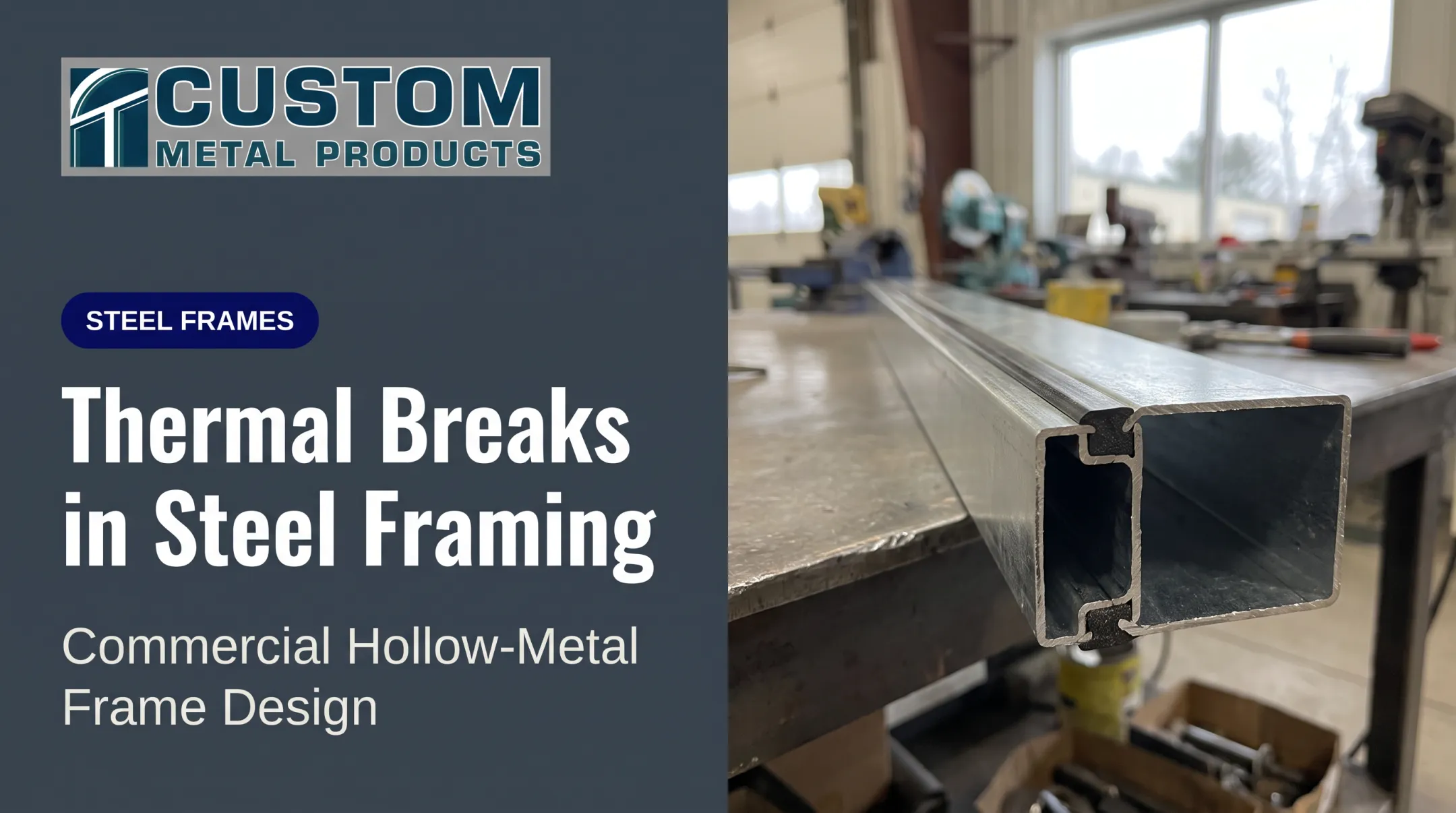
In commercial construction, a "steel door frame" usually means a hollow metal frame: a formed steel section that houses the door and is prepped for hinges, locks, closers, and strikes.
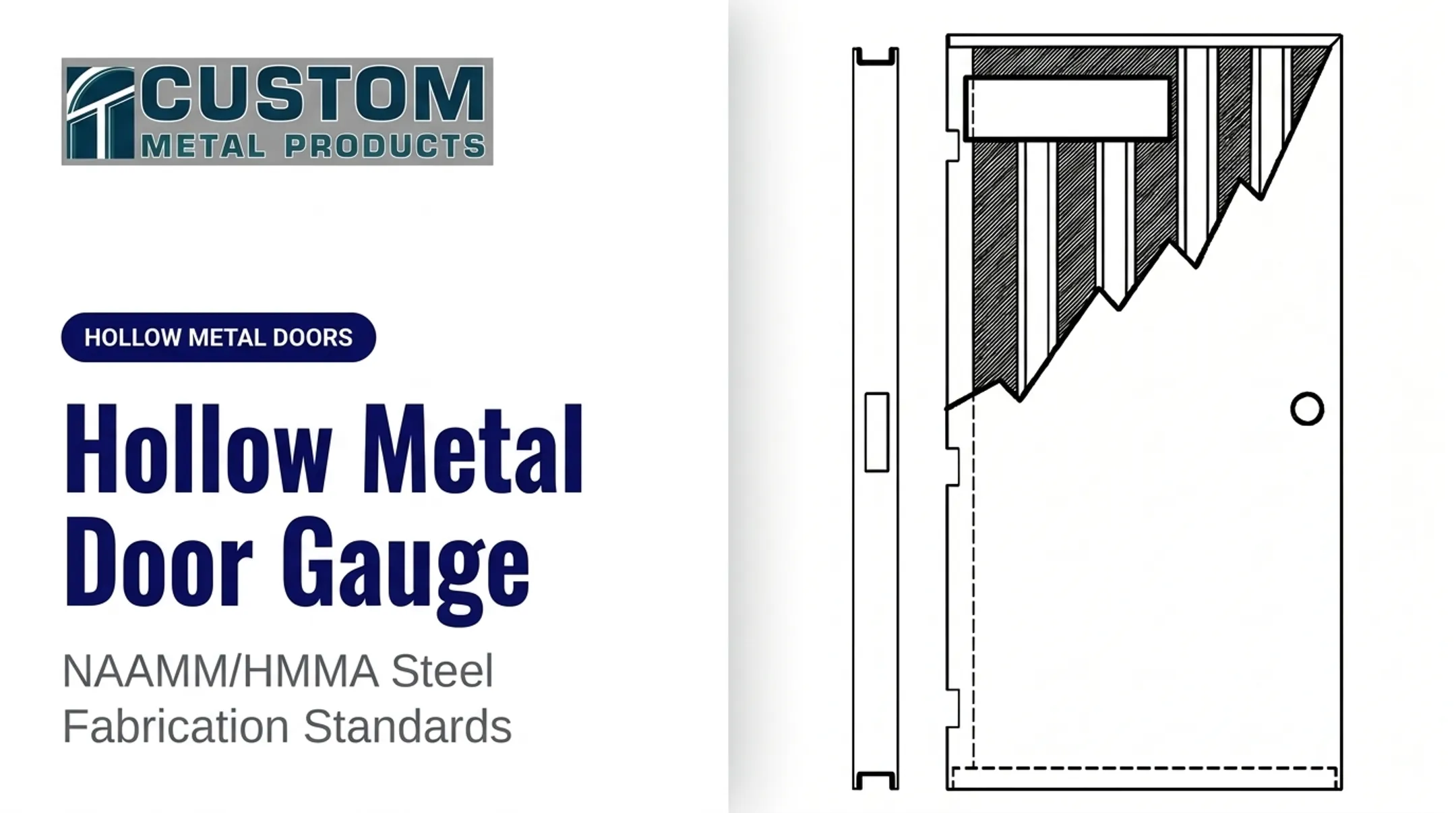
Interior frames typically use cold-rolled steel meeting ASTM A366 or hot-rolled pickled steel meeting ASTM A569, at a minimum of 16 gauge. Exterior frames need at least 16 gauge steel with a hot-dip zinc coating (A60 or G60) to resist corrosion.
Several variables change performance and price:
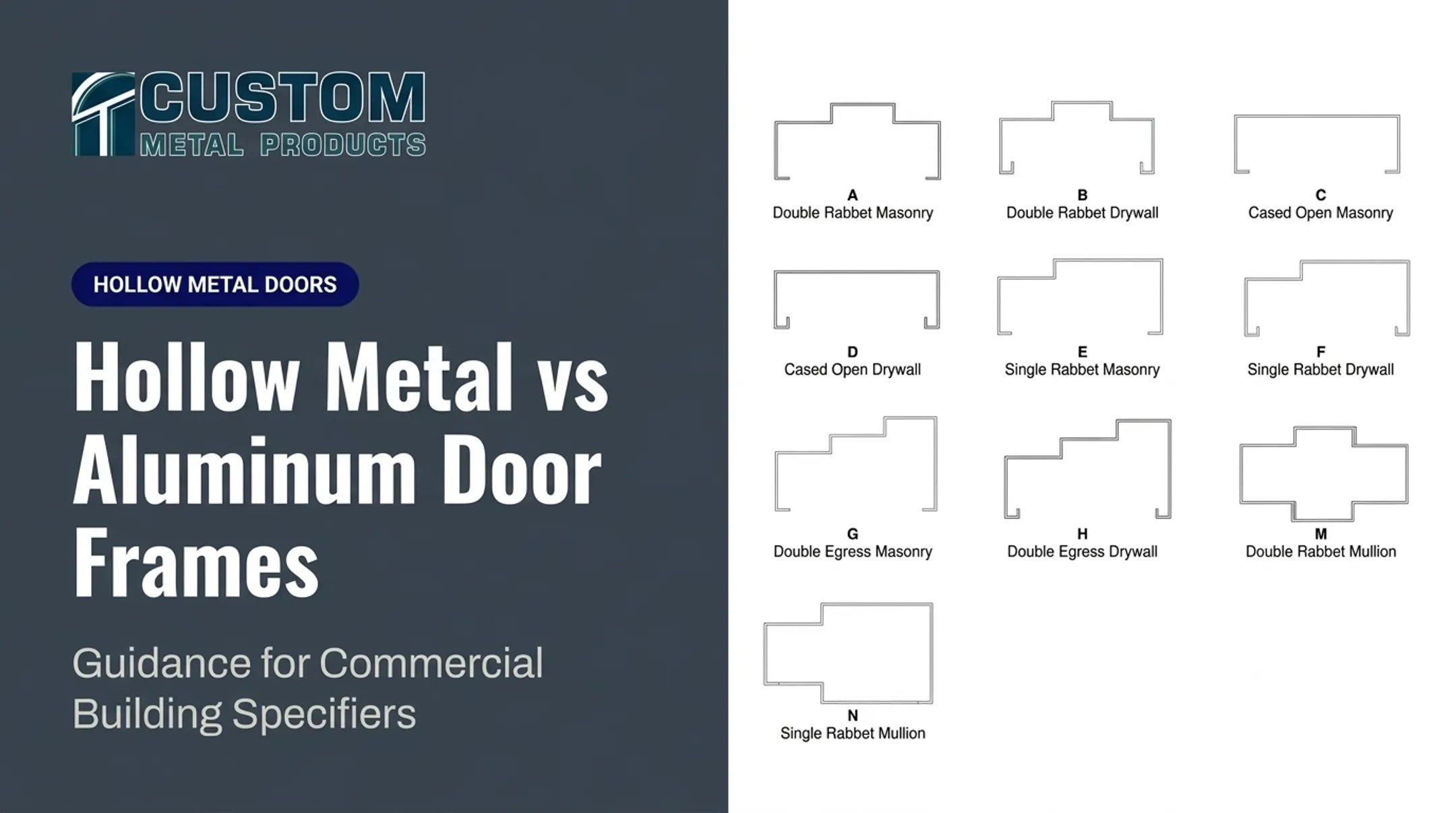
- Frame type: welded, knock-down, or slip-on
- Steel gauge, from 18 to 12 gauge for heavier-duty openings
- Profile: standard, arched, radius, or segmented
- Corrosion protection for exterior or humid environments
- Hardware preparations and reinforcement gauge
- Anchor type matched to masonry, concrete, or stud walls
Steel isn't maintenance-free. Finish damage needs primer touch-up, anchors need periodic checks, and frames in coastal or chemical-exposure environments need the right coating spec from day one, or rust can undercut an otherwise solid frame.
Those limits still leave plenty of openings where steel is the practical choice:
Where steel frames make sense:
- Schools and healthcare facilities with heavy daily traffic
- Multifamily common areas and corridors
- Warehouses, industrial spaces, and service rooms
- Fire-rated openings requiring tested assemblies
- Security-sensitive rooms and sanitation-focused environments like labs or food service
- Projects needing custom profiles or expedited delivery
Custom Metal Products manufactures stock and custom welded frames, plus cut-and-notch assemblies, at its Wilmington, North Carolina facility. UL-labeled fire-rated doors and frames follow NAAMM/HMMA specification procedures. Always confirm the required rating and configuration against project specs before ordering.

What Are Wood Door Frames?
Wood door frames, or jambs, are built from solid wood, laminated wood, engineered wood, or a mix of wood-based components. Construction varies by manufacturer: some use rabbeted solid stock, others build engineered cores with wood veneer faces for better dimensional stability.
Natural grain, easy staining or painting, and a less institutional look suit offices, hospitality spaces, and residential-style interiors. Wood also simplifies finish coordination when doors and trim need to match.
Before specifying wood, weigh these tradeoffs:
- Swelling or shrinking from moisture exposure
- Impact damage in higher-traffic zones
- Weaker fastener hold after repeated hardware adjustments
- Refinishing as the surface finish wears
- Fire, acoustic, or security ratings only through a tested, labeled assembly—not a plain solid wood jamb
Where wood frames fit well:
- Offices and hospitality interiors that prioritize appearance
- Boutique commercial spaces matching doors to millwork
- Protected interiors with moderate traffic
One manufacturer's project showcase lists Google's Cloud Campus in Seattle among its commercial wood-frame installations. That is an appearance-led interior choice, not proof that wood outperforms steel in demanding openings.
Steel VS Wood Door Frames: What Is Better?
Steel vs. Wood Door Frames: What Is Better?
Neither material wins across the board. The right choice depends on the opening's performance requirements, exposure, design intent, budget, and expected service life.
Lifecycle value matters more than sticker price. Weigh the full cost picture:
- Procurement and fabrication lead time
- Delivery and installation labor
- Factory versus field finishing
- Maintenance, repair frequency, and replacement cycles
Before choosing either material, confirm compliance needs for the full opening:
- Fire rating and smoke control
- Accessibility and security
- Acoustic performance
- Sanitation and moisture exposure
The complete door-and-frame assembly needs listing or test evidence behind it—not just a frame that "should" meet the requirement.
When opening conditions are clear, use this quick reference:
| Condition | Better fit |
|---|---|
| High traffic, frequent cleaning | Steel |
| Fire-rated commercial opening | Steel (tested assembly) |
| Impact-prone corridor or loading area | Steel |
| Protected interior, appearance-led design | Wood |
| Coordination with wood doors or millwork | Wood |
| Moderate traffic, controlled humidity | Either, based on design intent |
Installation quality can undercut either material. A frame that is the wrong size, poorly anchored, improperly sealed, or under-insulated will underperform no matter what it is made from.
Coordinate early among the architect, distributor, installer, hardware supplier, and manufacturer—especially on fire-rated or security openings.
Quick decision checklist:
- Where is the opening located, and what's the exposure to moisture or chemicals?
- How much daily traffic will it see?
- Does it need a fire, security, or acoustic rating?
- What door leaf and hardware will it pair with?
- What's the wall construction?
- What finish and maintenance expectations does the owner have?
- What's the required quantity and delivery date?
Real World Examples
Metro Health Hospital in Grand Rapids, Michigan, used hollow metal doors and frames from CURRIES across a facility with just over 2,000 openings.
The project had to balance hospital-grade security and durability with a hospitality-style patient experience. Steel's consistent fabrication and access-control hardware compatibility fit that brief better than lighter-duty materials.
Contrast that with Ferche Millwork's project showcase, which lists Google's Cloud Campus in Seattle among its commercial wood-frame installations.
Office campuses like this prioritize warmth, finish continuity, and design intent over maximum impact resistance, which is where wood frames perform well. Neither example proves one material dominates. They show that the environment, not brand preference, drove the material choice.

Situational cues:
- Steel fits when verified performance, security, or fire-rated resilience dominates the brief.
- Wood fits when protected conditions and appearance-led design dominate.
- Confirm the tested assembly and installation requirements with the manufacturer before selecting either.
If you're an architect, distributor, installer, or commercial builder sorting out a hollow metal opening, Custom Metal Products' sales and engineering team can help review configuration, fire-label requirements, and delivery timelines before you finalize a schedule.
Conclusion
For most demanding commercial openings, hollow metal frames offer the durability, fire-rating support, and security compliance that heavy-traffic buildings need. Wood frames still earn their place in protected, design-focused interiors where appearance and finish continuity matter more than maximum impact resistance.
Neither choice should come down to habit or a generic price comparison. Base the call on:
- The complete tested assembly and its ratings
- Lifecycle cost over the opening’s service life
- On-site installation conditions
- What the project needs from that opening day to day
Before you order, confirm ratings, hardware preparations, anchor types, and delivery requirements with your manufacturer and project team. Custom Metal Products' team can walk through configuration and fire-label needs for hollow metal openings across its Eastern U.S. delivery routes.
Frequently Asked Questions
Are steel frames better than wood?
Steel frames generally perform better in heavy traffic, fire-rated, and security-sensitive commercial openings. Wood remains a strong option for protected interiors where appearance and finish continuity matter more than maximum durability.
Are steel door frames more durable than wood?
Steel resists impact, warping, cracking, rot, and insects better than wood in most commercial settings. Actual service life still depends on coating quality, exposure conditions, correct installation, and ongoing maintenance.
Which is cheaper, steel or wood door frames?
It depends on scope. Wood can cost less for a basic interior jamb, while steel often wins on lifecycle cost due to lower repair and replacement needs. Get a project-specific quote instead of relying on a general price comparison.
Are steel door frames fire rated?
Some hollow metal door-and-frame assemblies are fire rated when tested, UL-labeled, and installed per code requirements. Not every steel frame carries a rating automatically. It has to be part of a certified assembly.
Do steel door frames require more maintenance?
Steel needs routine inspection, finish touch-up, and corrosion prevention, especially in humid or coastal environments. Wood typically needs more frequent refinishing and moisture management, so "more maintenance" depends on the environment.
When should you choose a wood door frame?
Choose wood for protected interior, moderate-duty, appearance-led applications like offices or hospitality spaces. It's the better fit when natural grain, stainability, and coordination with wood doors or millwork matter most.