
Introduction
Specifying the wrong frame material can mean a failed inspection, a rusted-out jamb within a few winters, or a security gap nobody catches until it's too late. Hollow metal and aluminum door frames both appear throughout commercial construction, but they solve different problems.
Even basic specs diverge fast. Hollow metal frame thickness alone can range from 0.042 to 0.093 inches depending on the steel level and model under industry standards, and that variation matters more than most spec sheets let on.
This comparison walks through construction, applications, and the performance factors that decide which material belongs in your opening: cost, durability, fire and security ratings, appearance, and maintenance. Neither material wins every category. The goal is picking the right one for the specific wall, hardware, and code requirement in front of you.
Key Takeaways
- Hollow metal (steel) frames deliver strength, security, and fire-rated performance for demanding commercial openings
- Spec aluminum frames for lightweight, corrosion-resistant storefronts and modern glazed facades
- Match wall type, hardware, fire rating, and maintenance plans—not the metal name alone
- Verify tested assemblies and code listings before you finalize the spec
Hollow Metal vs Aluminum: Quick Comparison
Cost
Pricing depends heavily on gauge, profile, finish, glazing, and fire rating, not on the material name alone. One US supplier lists knock-down steel frames starting around $160 and welded frames from $191 before configuration, hardware prep, or labels are added.
There's no reliable published aluminum frame-only price to match against that figure: compare actual project quotes, not generic material averages.
Total cost also includes:
- Installation labor (welded frames arrive assembled; KD frames ship in pieces for field assembly)
- Repainting or touch-up after damage
- Field repair versus full replacement
- Schedule impact if a frame doesn't match the door schedule
Composition
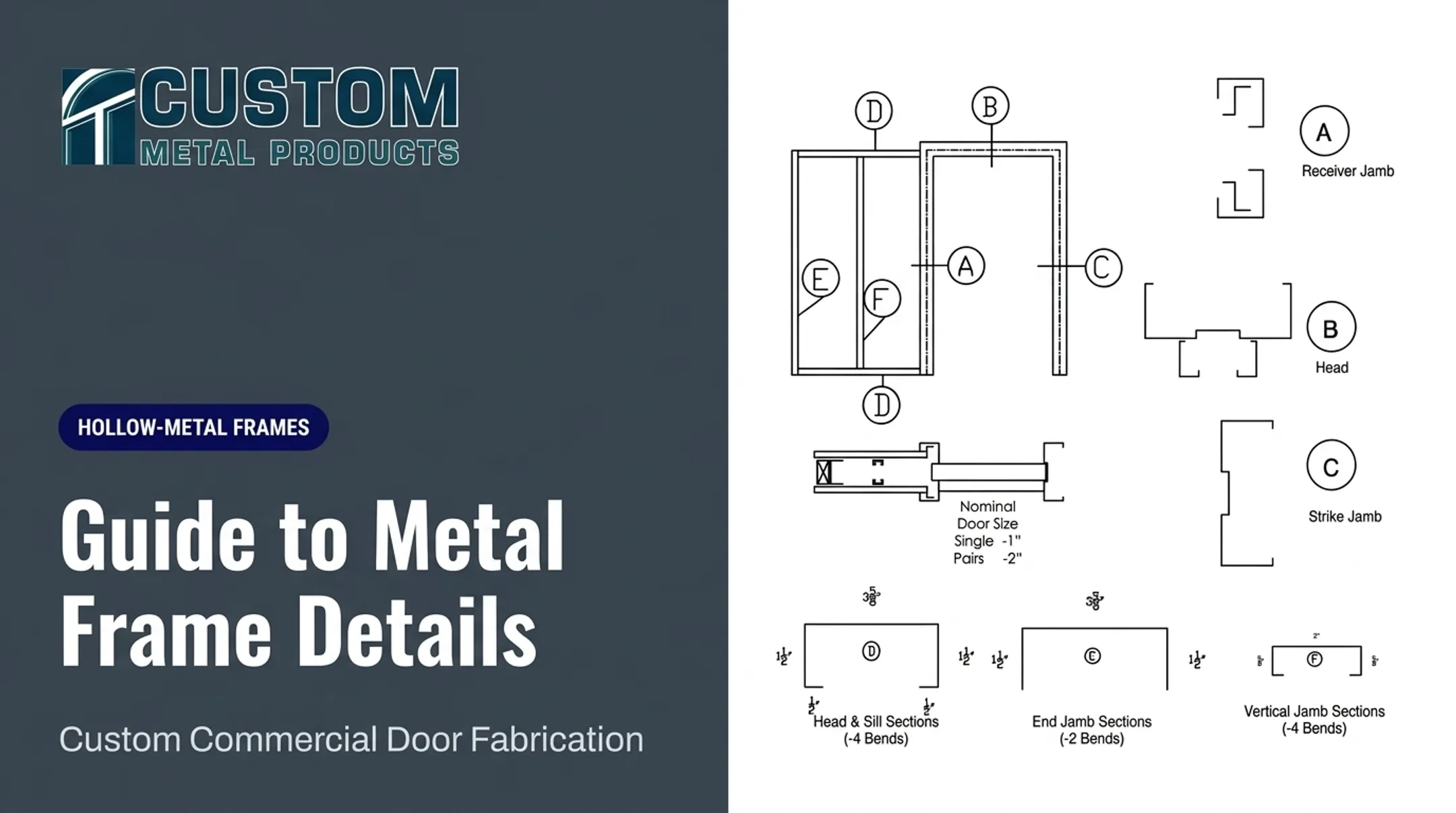
Hollow metal frames are formed and welded steel assemblies. Custom Metal Products fabricates them in gauges from 16 ga to 12 ga, using cold-rolled steel conforming to ASTM A 366 or hot-rolled, pickled steel conforming to ASTM A 569 for interior applications.
Configurations include welded, knock-down, and slip-on units, plus custom arched, radius, or segmented profiles.
Aluminum frames are extruded profiles, not formed sheet metal. They're assembled into framed openings and finished with anodized, painted, or powder-coated surfaces. That method favors glazing and clean architectural lines over heavy fabrication.
Durability and Abuse Resistance
Steel's rigidity is why hollow metal dominates high-traffic and high-abuse environments. A welded steel frame resists racking, impact, and repeated slamming better than a lighter extrusion.
Aluminum's lower weight and corrosion resistance are real advantages, but softer profiles can dent or deform under the same abuse a steel frame shrugs off. Manufacturers offer heavier-duty entrance systems for higher-traffic storefronts for that reason. Match the profile to the traffic level instead of assuming all aluminum frames perform the same.
Fire, Security, and Acoustic Performance
This is where material claims get misleading. Fire, forced-entry, and acoustic ratings belong to the tested door-and-frame assembly, not the base metal. A steel frame isn't automatically fire-rated just because it's steel.
Custom Metal Products manufactures UL-labeled fire-rated hollow metal doors and frames, with fire-rating procedures complying with NAAMM/HMMA specification requirements. Representative ratings include:
- 3-hour
- 1-1/2-hour
- 1-hour
- 3/4-hour
- 1/3-hour
Double-egress hollow metal pairs, for example, can carry ratings up to 3 hours at 1-3/4-inch door thickness. Before you specify, verify the tested listing and manufacturer limitations, not just the material.
Appearance, Corrosion, and Maintenance
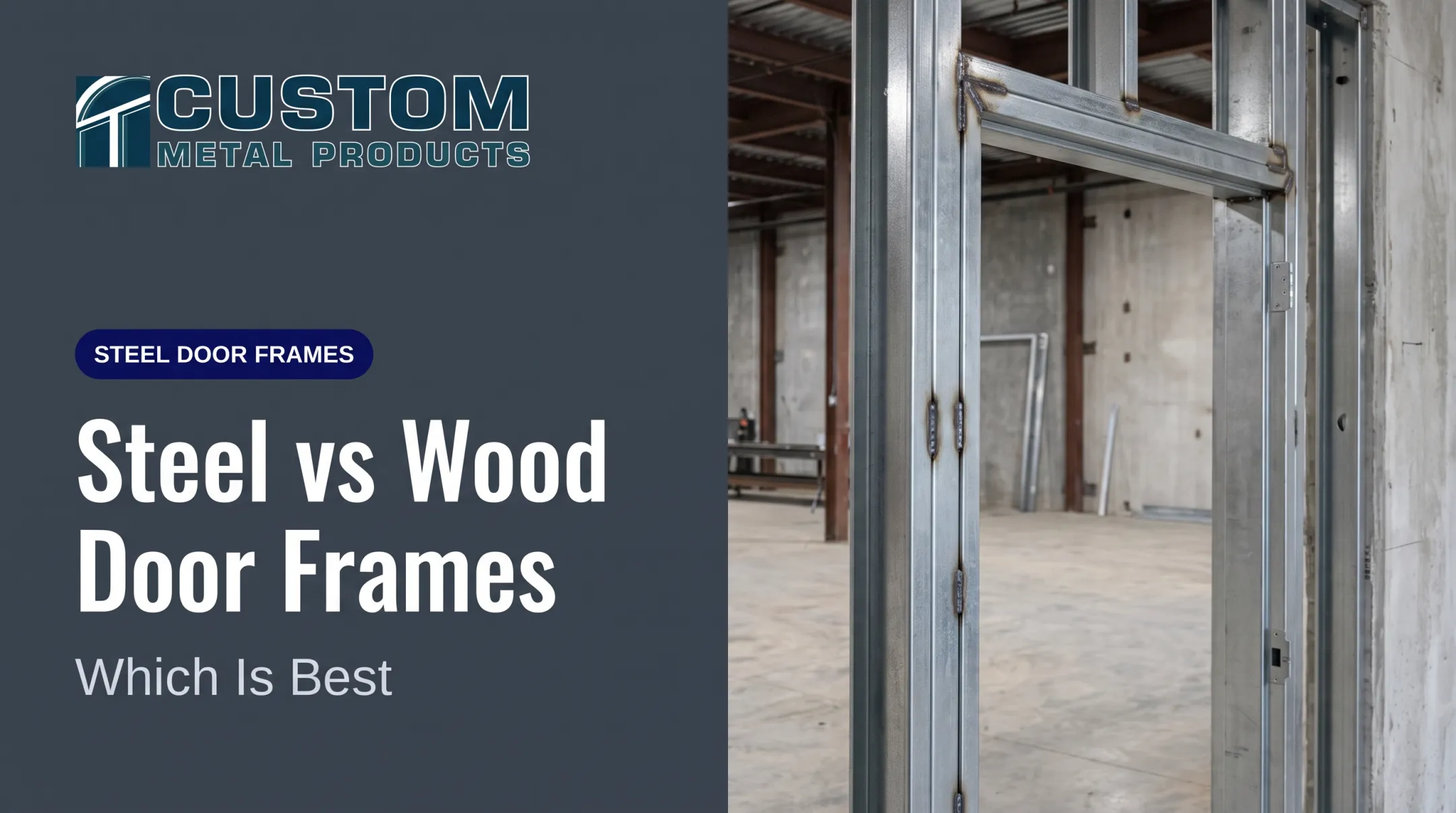
Steel frames from Custom Metal Products receive rust-inhibitive primer meeting ASTM B 117 salt spray testing for 150 hours and ASTM D 1735 water fog testing for 200 hours. Exterior units get hot-dip zinc coating per ASTM A 526. Damaged steel can be sanded and recoated in the field, a repair advantage aluminum doesn't always offer.
Aluminum's anodized or powder-coated finish gives it a cleaner architectural look with strong baseline corrosion resistance. It still needs periodic maintenance and is harder to field-repair after a scratch or dent. Coastal exposure, chemical environments, and available maintenance resources should all factor into the finish decision, regardless of which metal you choose.

What Is Hollow Metal?
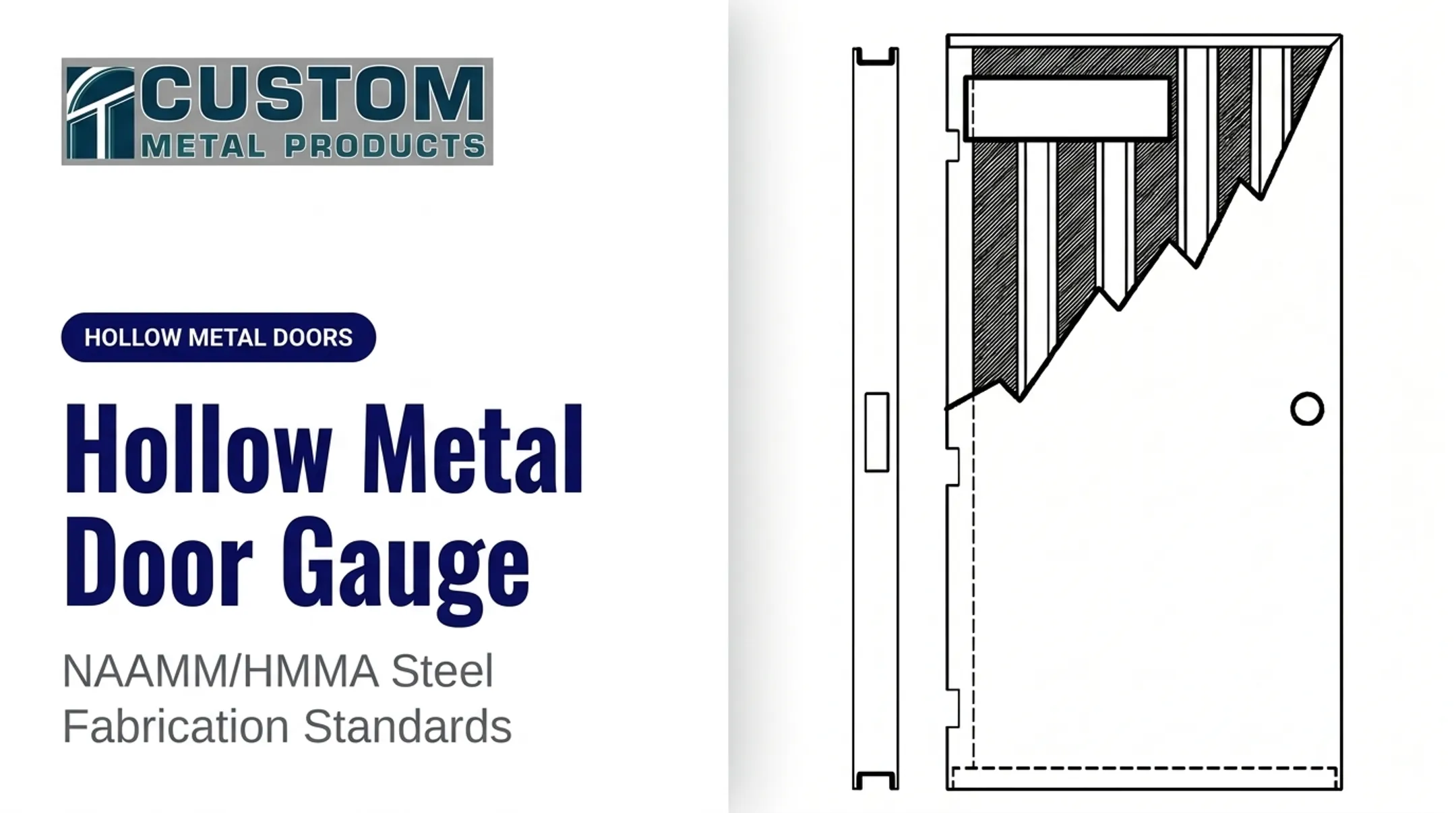
Hollow metal refers to commercial steel doors and frames formed from sheet steel, with a hollow interior section that can incorporate reinforcement, insulation, or other features depending on the product line. The industry treats "hollow metal" and "steel door" as largely interchangeable terms — the "hollow" label describes construction, not an empty, unsupported cavity.
Custom Metal Products builds these frames in stainless steel or A60 galvannealed material, gauges 16 ga to 12 ga, as fully welded or cut-and-notch (KD) assemblies. Hardware reinforcement is substantial:
- 7-gauge minimum hinge reinforcement (1-1/4 by 10 inches)
- 12- or 16-gauge strike reinforcement
- 12-gauge flush-bolt and closer reinforcements
That reinforcement is exactly why hollow metal handles heavy-duty hardware, frequent hardware changes, and repeated impact without failing at the anchor points.
Use Cases of Hollow Metal
Hollow metal frames show up wherever abuse resistance, security, or fire compliance drives the spec:
- Healthcare facilities and hospitals (including lead-lined, radiation-shielding frame options)
- Schools and institutional buildings
- Apartment buildings and multifamily housing
- Warehouses and industrial spaces
- Service corridors and mechanical rooms
- Security-sensitive rooms requiring rated openings
Hollow metal is the stronger choice when a project needs rated openings, unusual wall conditions, acoustic separation, or custom fabrication that off-the-shelf products can't handle.
A documented example: for The Confluence, a high-rise project, a distributor ordered more than 700 varying steel frames requiring a no-return-trim welded design so millwork could attach cleanly.
Custom Metal Products adjusted its production schedule to deliver the custom frames and millwork on time, proving that custom fabrication and scheduling flexibility can solve problems standard stock can't.

Custom Metal Products manufactures both stock and custom hollow metal doors and frames, including welded and cut-and-notch configurations, with UL-labeled fire-rated products available for projects facing exactly this kind of schedule pressure.
What Is Aluminum?
Aluminum door frames are lightweight extruded profiles, typically assembled into storefront systems, glazed entrances, or modern commercial facades. They're built around a different priority than hollow metal: daylight, appearance, and corrosion resistance rather than maximum impact resistance.
Core benefits include:
- Lower handling weight, which speeds installation
- Corrosion resistance in appropriate environments
- Streamlined, architectural sightlines
- Multiple finish options (anodized, painted, powder-coated)
The trade-offs matter just as much. Aluminum profiles can dent more easily than steel under repeated abuse. Field modification or hardware changes may be restricted depending on the specific system. Fire, security, thermal, and acoustic capabilities still need product-by-product verification. A clean look and high visibility do not equal a rating.
Where Aluminum Frames Fit Best
Aluminum frames make the most sense in:
- Storefronts and retail entrances
- Glazed office lobbies and curtain wall transitions
- Interior partitions where daylight matters
- Exterior openings prioritizing corrosion resistance over abuse resistance
One documented example: a Wendy's retail location in Hilliard, Ohio, used an aluminum storefront system with a 2-inch sightline and matching narrow-stile entrance doors in an anodized finish. That configuration shows how aluminum is typically specified when narrow sightlines and finish consistency drive the entrance design.
Aluminum earns its spot when glass-heavy facades, lower assembly weight, and routine rust prevention outweigh the need for maximum abuse resistance.
Hollow Metal vs Aluminum: What Is Better?
The better frame depends on the full opening: ratings, traffic, environment, design, and hardware—not the metal name alone.
Decision Factors to Weigh First
Before choosing, review:
- Required fire rating and security level
- Traffic volume and abuse exposure
- Acoustic and thermal performance targets
- Corrosion environment (coastal, chemical, interior)
- Visual design intent
- Wall type, installation method, and hardware plan
- Long-term maintenance expectations
Architects and spec writers should confirm product data, tested listings, and hardware compatibility against the complete opening assembly, not a material preference alone, before locking in a decision.
Situational Recommendations
Choose hollow metal when:
- Strength, security, or impact resistance leads the spec
- The opening needs a demanding fire rating
- Custom fabrication or repairability matters
- Hardware will change frequently over the building's life
Choose aluminum when:
- Low weight and storefront aesthetics are priorities
- Glazing and daylight are central to the design
- Corrosion resistance matters more than maximum abuse resistance
**Mixed-material strategies are common. Aluminum-framed storefront zones are often paired with hollow metal in service corridors, stairwells, or security-sensitive rooms. Just confirm the door, frame, hardware, and ratings are all compatible across the transition.
Real-World Examples
The Confluence high-rise (steel) and the Wendy's storefront (aluminum) illustrate this well. One project needed custom welded steel frames at volume with a tight production schedule. The other needed a clean, anodized aluminum storefront for retail visibility and daylight. Neither material would have solved the other's problem.

Before you substitute materials: If you're a distributor, installer, or builder facing unusual dimensions, a schedule crunch, or a door-schedule miss, consult a qualified manufacturer first. A mismatch discovered at rough-in is expensive; a phone call beforehand isn't.
Custom Metal Products works with distributors and commercial builders across the eastern United States on exactly this kind of situation — custom hollow metal doors and frames, lead-time options from one day to standard production schedules, and delivery straight to the job site. If you're evaluating a hollow metal spec, get in touch before the schedule gets tighter.
Conclusion
Match the frame to the opening:
- Hollow metal when strength, security, fire performance, customization, and repairability drive the spec
- Aluminum when lightweight build, corrosion resistance, glazing, and architectural appearance come first
Base the call on the full tested assembly—wall condition, hardware, code requirements, lifecycle cost, and installation method—not material names alone. Hollow metal and aluminum are built for different jobs. Specify the one that fits your opening's real demands.
Frequently Asked Questions
Is an aluminum or steel frame better?
Steel (hollow metal) is generally stronger and better suited to demanding, high-abuse openings. Aluminum works better for lightweight, glazed, corrosion-resistant, or design-focused applications like storefronts.
Is hollow metal the same as aluminum?
No. Hollow metal usually refers to formed steel commercial doors and frames, while aluminum frames are made from extruded aluminum profiles with a different manufacturing process and finish system.
Is a hollow metal door the same as a steel door?
Hollow metal doors are a type of steel door construction, and the industry often uses the terms interchangeably. Actual performance depends on the construction, core type, gauge, and tested assembly — not the label alone.
What is the strongest metal for a door?
Steel is commonly selected for strength and security in commercial doors. Actual performance still depends on the complete tested door, frame, hardware, and installation assembly, not the metal in isolation.
When should you use hollow metal doors?
Use hollow metal in high-traffic, institutional, industrial, security-sensitive, fire-rated, or acoustic applications. Always verify the project's specific ratings and code requirements before finalizing the spec.
Why do old houses have metal door frames?
Older buildings often used metal frames for durability, fire resistance, security, and compatibility with masonry construction. Residential historic frames differ significantly from the tested, code-driven hollow metal systems used in modern commercial buildings today.