
Introduction
Specifying a hollow metal door isn't as simple as picking the thickest steel on the price sheet. Gauge affects durability, weight, hardware compatibility, and how well a door handles years of daily abuse, but it's just one variable in a much bigger equation.
Many project teams treat gauge as a shortcut for quality. It isn't. A door's actual performance depends on duty classification, core construction, reinforcements, and how the leaf pairs with its frame.
Get the gauge wrong (too light or unnecessarily heavy) and you risk premature wear, hardware failure, or a budget blown on steel you didn't need.
This article breaks down what gauge actually measures, how it maps to real-world applications, and where relying on gauge alone gets specifiers into trouble.
Key Takeaways
- Gauge is door-skin steel thickness; lower numbers mean thicker material—verify against current standards.
- Duty level, core type, reinforcements, and hardware preps matter as much as gauge itself.
- Door gauge and frame gauge are separate specifications — never assume they match.
- Fire-rated, high-abuse, and security openings need the full labeled assembly, not gauge alone.
- Confirm gauge and construction details in approved submittals before fabrication begins.
What Hollow Metal Door Gauge Represents
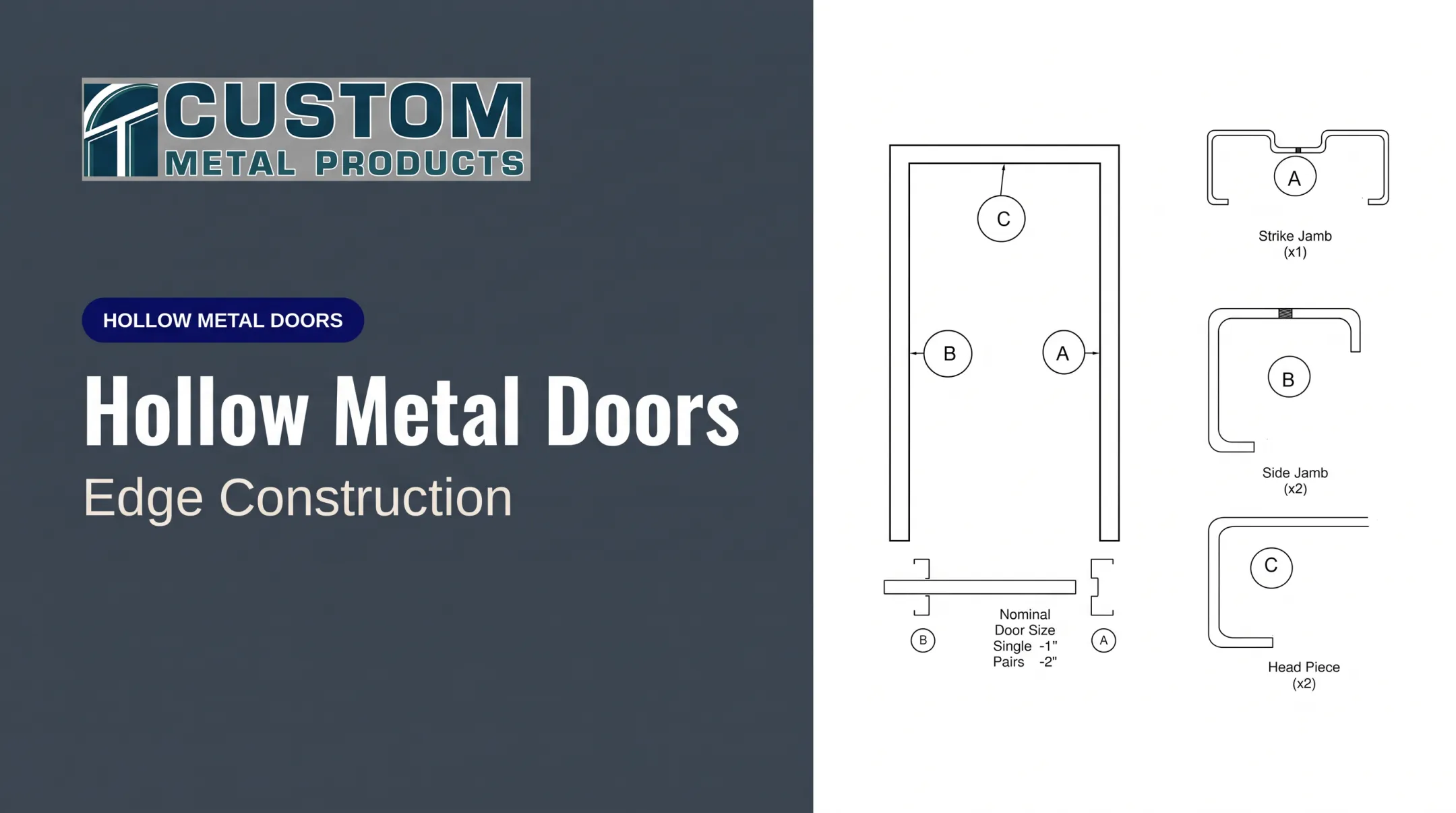
Hollow metal door gauge is the conventional shorthand for the thickness of the steel sheet used to form a door's face skins. Modern specifications increasingly skip the gauge number entirely and call out actual thickness in inches or millimeters instead.
The Steel Door Institute's ANSI/SDI A250.8-2023 standard treats gauge numbers as reference-only figures, with the governing minimum thickness stated in decimal form.
Here's the general rule: a lower gauge number means thicker steel. A 14-gauge skin is heavier than an 18-gauge skin. But gauge-to-thickness conversions vary slightly by source, so don't guess — check the manufacturer's published table or current SDI reference before finalizing a spec.
A few things gauge is not:
- A complete performance rating. Two doors with identical skin gauge can behave very differently depending on core, stiffeners, and construction.
- Interchangeable between door and frame. Each component carries its own gauge requirement, tied to its own duty classification.
- A standalone quality signal. A well-built 18-gauge door in the right application can outperform a poorly configured 16-gauge door in the wrong one.
Within the complete opening, gauge influences stiffness, dent resistance, overall weight, how the door ships and installs, and how much reinforcement the hardware needs. Custom Metal Products fabricates doors across an 18-gauge to 12-gauge range, and the right choice always traces back to what the opening actually has to endure.
Factors That Influence the Required Gauge
Duty level isn't chosen in a vacuum. Several project conditions push a door toward heavier or lighter construction.
Traffic and abuse exposure:
- Cycle frequency: a stairwell door opened 500 times a day wears differently than a rarely used closet door
- Impact risk from carts, equipment, or foot traffic
- Vandalism potential in public-facing or unsupervised areas
- Door size and leaf weight, which affect stress on hinges and skins
- Expected service life for the building type
Environmental conditions:
- Exterior exposure, humidity, and corrosive atmospheres
- Need for galvannealed steel or protective finishes instead of gauge alone
Custom Metal Products' PH Series pairs an 18-gauge standard skin with optional A60 galvannealed material for corrosion resistance. That finish choice is separate from thickness.

Performance requirements (evaluate with gauge, not instead of it):
- Fire rating and UL classification of the full assembly
- Acoustical targets (STC)
- Thermal performance (U-factor)
- Security needs for the opening
Confirm minimums against current SDI or manufacturer documentation rather than a generic rule of thumb.
Gauge Range, Technical Properties, and Application Fit
Commercial hollow metal doors typically fall into a 20-gauge through 12-gauge range, with each thickness tied to a recognized duty level. Per SDI 108-2023, these are guidance benchmarks: a starting point for evaluation, not a substitute for project-specific review.
| Gauge | Minimum Steel Thickness | Typical Duty Level |
|---|---|---|
| 20 | 0.032 in | Level 1 – Standard Duty |
| 18 | 0.042 in | Level 2 – Heavy Duty |
| 16 | 0.053 in | Level 3 – Extra Heavy Duty |
| 14 | 0.067 in | Level 4 – Maximum Duty |
| 12 | 0.093 in | Reference only; no SDI duty level assigned |

Source: SDI 117-26 and NAAMM/HMMA 803-08 reference tables — verify against current manufacturer data.
18- and 20-Gauge Doors
Thinner gauges (18–20) fit lower-abuse interior applications: office doors, storage rooms, and areas with light, predictable traffic. Custom Metal Products' PH Series uses 18-gauge skins as standard, with 16-gauge available as an upgrade.
Trade-offs to weigh:
- Lower dent resistance under repeated impact
- Reduced weight, which can simplify hardware selection
- Lower material cost and typically shorter lead times
16-Gauge Doors
Sixteen-gauge doors show up across a wide swath of commercial buildings — schools, retail corridors, office lobbies with heavier foot traffic. Both the PB Series (polystyrene core) and SB Series (steel-stiffened core) use 16-gauge as their standard skin.
One caution: a thicker skin does not automatically make a door fire-rated, security-rated, or compatible with every hardware set. Those ratings depend on the tested, listed assembly, not skin thickness alone.
14- and 12-Gauge Doors
For high-abuse corridors, detention or security-sensitive openings, and industrial environments, 14-gauge and 12-gauge options come into play. The SB Series offers both as upgrades from its 16-gauge standard, with 3-hour UL ratings available at 16-gauge and 14-gauge construction.
Heavier gauge brings real trade-offs:
- Added door weight, which increases demands on hinges and closers
- Harder handling during installation
- Higher material cost and longer lead times
- Potential compatibility questions with lighter-duty frames
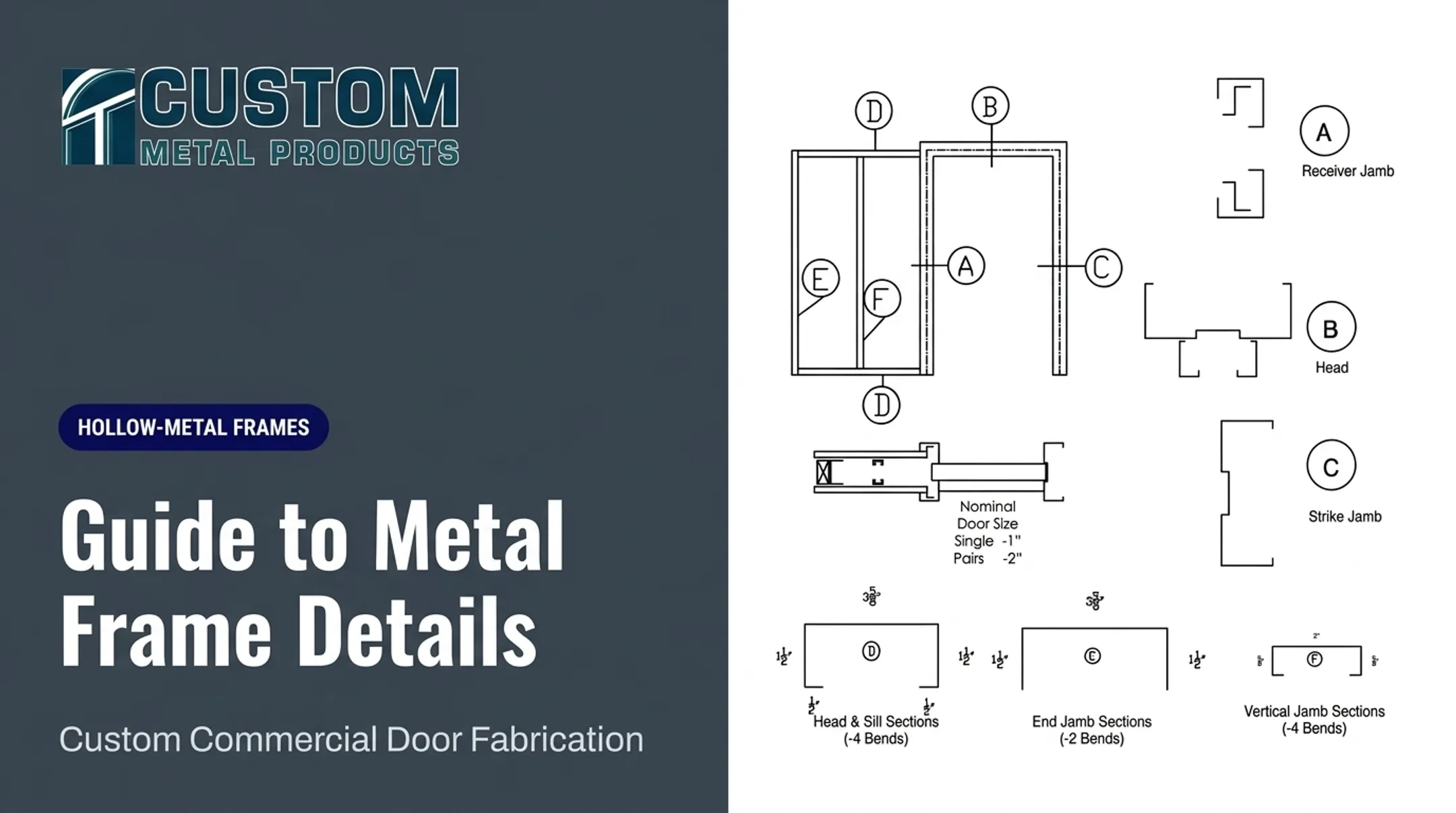
Door Gauge Versus Frame Gauge
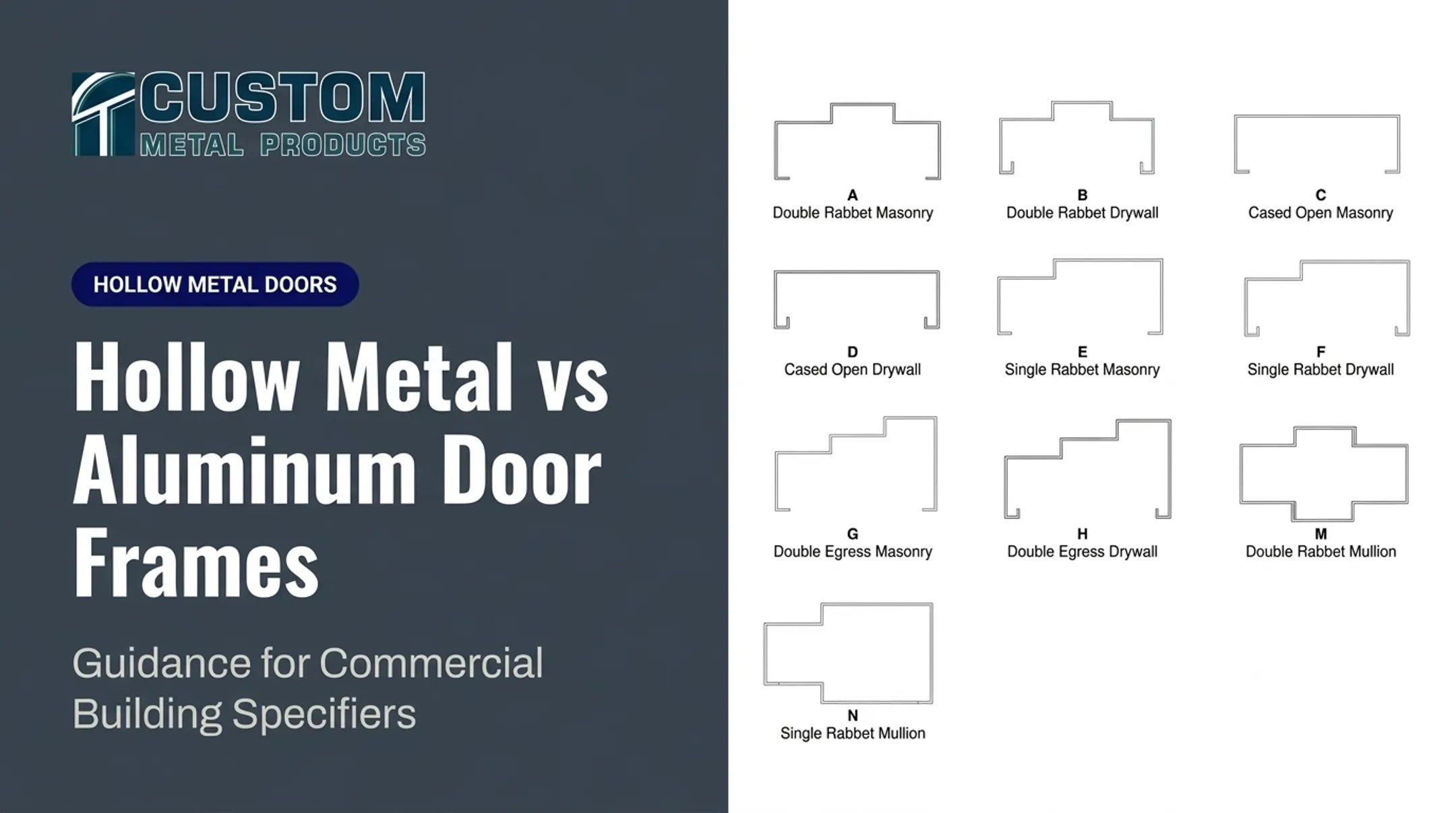
Frame gauge follows its own logic. Anchorage type, wall condition, and abuse exposure drive the decision independently of door gauge.
| Frame Gauge | Minimum Steel Thickness | Typical Application |
|---|---|---|
| 18 | 0.042 in | Level 1 – Standard Duty frames |
| 16 | 0.053 in | Levels 2-3; Custom Metal Products' minimum for frames receiving hollow metal doors |
| 14 | 0.067 in | Level 4 – Maximum Duty and typical exterior frame applications |
Per internal construction specifications, Custom Metal Products requires interior frames to be at least 16 gauge, and exterior frames to be at least 16 gauge with A60 or G60 zinc coating. These are frame-specific minimums. Don't assume they mirror the door leaf's gauge.
Selection Checklist
Before locking in a gauge, confirm:
- Traffic frequency and abuse exposure for the opening
- Interior versus exterior location and moisture exposure
- Material and finish requirements (cold-rolled, galvannealed, stainless)
- Door size and resulting leaf weight
- Core type (polystyrene, polyurethane, steel-stiffened, honeycomb)
- Hardware preparations and reinforcement needs
- Fire label requirements, if applicable
- Frame gauge and anchorage compatibility
- Applicable SDI, ANSI/SDI, or project-specific standards
How Gauge Is Specified, Measured, and Validated
The gauge number on a quote should match what's on the schedule, the submittal, the door label, and the product that actually shows up on the truck. When any of those don't line up, something in the chain broke down.
Specification and Documentation
Gauge should never appear alone on a door schedule. Pair it with duty level, construction model, material type, core, fire rating, hardware preparations, finish, and frame requirements. Custom Metal Products' door schedule forms and submittal packages include dedicated gauge fields alongside these other specs, plus an HMMA reference number for traceability.

Pull minimums from current SDI, ANSI/SDI, or manufacturer data — not a generic chart copied from an old spec.
Measurement and Verification Methods
Field-measuring a finished door is trickier than it sounds. Paint, seams, folds, and internal stiffeners can throw off a simple caliper reading. Keep these distinctions clear:
- Skin thickness (gauge) is not overall door thickness; a standard 1-3/4-inch door has a skin measured in thousandths of an inch, not fractions
- Manufacturer product data, submittal drawings, and labels remain the most reliable confirmation of delivered thickness
- When substrate thickness is disputed, resolve it with the manufacturer—don't infer it from overall door measurements
Coordination Before Ordering
Run through this checklist before placing an order:
- Confirm nominal door size and handing
- Verify door gauge and frame gauge separately
- Confirm core type and material
- Match hardware preps to the approved hardware schedule
- Confirm fire-label requirements and rating duration
- Verify finish and coating specs
- Align delivery timing with the project schedule
Custom Metal Products works directly with distributors and commercial project teams on custom door and frame configurations, spec review, and order coordination — helping confirm gauge and construction details match what the project actually requires before fabrication starts. Never promise a gauge or certification that isn't documented for the specific product ordered.
Implications of Incorrect Gauge Selection
Getting gauge wrong shows up in predictable ways, in both directions.
Under-specified doors tend to show:
- Denting and visible deformation under normal use
- Premature wear at high-contact points
- Hinge or closer stress from repeated cycling
- Hardware misalignment over time
- Shortened service life relative to the building's needs
Over-specified doors create their own headaches:
- Unnecessary weight, straining hinges and closers rated for lighter leaves
- Higher material cost without a corresponding performance benefit
- Harder handling during installation
- Possible compatibility issues if the frame wasn't upgraded to match
Compliance risk is the sharpest edge here. For fire-rated openings, substituting a different gauge without confirming the tested assembly can compromise the listing entirely.
NFPA's fire door guidance makes clear that labeled doors and frames must reflect tested, listed components. A gauge swap alone doesn't preserve that rating.

Custom Metal Products' fire-rated products carry UL labels and are fabricated to NAAMM/HMMA procedures. All hollow metal work carries a one-year warranty against workmanship defects, but that warranty assumes the ordered configuration matches what's installed.
Common Misinterpretations of Hollow Metal Door Gauge
A few assumptions cause more problems than they solve:
- "Lowest gauge number is always best." Application fit and complete assembly performance matter more than raw thickness.
- "Gauge equals overall door thickness." Skin gauge and the finished 1-3/4-inch door dimension are two different measurements entirely.
- "Door and frame gauge should match." Each is selected independently based on its own duty and anchorage requirements.
- "A generic gauge chart applies everywhere." Fire-rated, exterior, and high-abuse openings need manufacturer listing review, not a one-size chart.
- "Nominal descriptions are exact." Actual measured thickness includes manufacturing tolerances — confirm against the applicable standard.
Conclusion
Hollow metal door gauge shapes stiffness, weight, abuse resistance, and how a door integrates with its hardware and frame. Gauge alone does not predict durability, fire performance, or service life.
Reliable selection matches gauge and construction to:
- Duty and environment
- Hardware and frame compatibility
- Labeling requirements
- Approved project documentation
If you're a distributor, installer, architect, or commercial builder working through a hollow metal spec, Custom Metal Products can help review the requirements before you order. The team fabricates custom hollow metal doors and frames in a range of gauges, materials, and cores, including UL-labeled fire-rated assemblies where the opening calls for one.
Reach out at (866) 893-3338 or info@custommetalproducts.bz to talk through your project.
Frequently Asked Questions
Is a 20 gauge steel door good?
It depends on the opening's duty classification, traffic, and abuse exposure. A 20-gauge door works well in low-abuse interior settings, but verify the manufacturer's tested specifications rather than judging by gauge alone.
What gauge are hollow metal door frames?
Frame gauge varies by duty level, construction type, and wall condition — commonly 18, 16, or 14 gauge. Frame gauge is a separate specification from door gauge, so confirm the exact gauge on the approved frame submittal.
What is the thickness of a standard hollow metal door?
Standard commercial hollow metal doors are typically 1-3/4 inches thick overall, which is different from the steel skin's gauge. Reference the applicable ANSI/SDI standard or manufacturer specification for your exact product.
How thick is a 14 gauge hollow metal frame?
A 14-gauge frame measures approximately 0.067 inches (1.70 mm) of minimum uncoated steel, typically associated with Maximum Duty frame applications. Confirm this against your manufacturer's current documentation.
How thick is a 16 gauge hollow metal door frame?
A 16-gauge frame measures approximately 0.053 inches (1.34 mm) of minimum uncoated steel. Check this figure and its tolerances against the specific product's approved submittal.